Wednesday, March 23, 2011

Bluest Eye I

"Survival of the Prettiest"
One of the biggest themes of this book seems to be sexuality and the exploration of beauty and what it means to be a woman. Pecola, for instance, struggles with becoming a woman and understanding what love is. She says, “my man, who before leaving me, would love me” (32). During those socioeconomic times, these women remained inferior to their men. Their youth and innocent is conflicted with thoughts of love and sexuality. In addition to their experiences and encounters with men, the girls are heavily influenced by white society and their standards of beauty.
Society predetirmines the standards of beauty and pressures women
to conform. 
“Bluest Eye” refers to the desire for perfection that these girls seek. The protagonist says, “ Adults, older girls, shops, magazines, newspapers, window signs- all the world had agreed that a blue-eyed, yellow haired, pinked-skinned doll was what every child treasured”(20).  Although the eyes not only represent beauty to them, but they are a symbol of love and comfort. As Morrison explains, the family lives in poverty. Claudia describes her house with an “icebox door opening on rusty hinges in July” (21). Society argues that beauty is only a material desire, however, Morrison implies the deeper implication of acceptance. Pecola, Claudia and Frieda are exposed to the harsh reality of living in a rural town just after the Great Depression. Many of their family friends are out of jobs or in jail. In fact, Pecola’s father is sent to prison.  This is contrasted with the white girls who live in town, who are portrayed as living comfortable lives. Maureen, Pecola’s classmate, is described as the epitome of white beauty. She flaunts her beauty as a sign of grace and perfection. Her beauty is related to her parents’ wealth. The girls say, “She was rich, at least by our standards, as rich as the richest of the white girls, swaddled in comfort and care” (62). More than anything, the girls seek beauty as a means of security. The girls hope that with beauty comes love, with love comes a husband and family, and what family comes security. The novel shows how the girls explore these deeper issues as they witness turmoil and despair on a day-to-day basis.
Girls are exposed to pressures of beauty at a young age

This book reflects the conflict many African American women face today in the presence of white society. For example, standards are white beauty idealize long, soft, smooth hair and lean, skinny bodies. Morrison explains , Compared to black males, Black females have been more profoundly affect by the prejudicial fallout surrounding issues of skin color, facial features, and hair” (Ashe). Certainly, Morrison is refuting the argument that beauty is only a material quality. But in fact, it means much more and it is ever-present in the socioeconomic portions of our lives.
"Survival of the Prettiest" does beauty contribute to social status? 

This documentary, "Good Hair" explores standards of beauty, particularly "white" conformity, and its stark influence on modern African American beauty. Just like "Bluest Eye", the documentary argues that women identify beauty as a symbol of social status.


Ashe, Bertram D. "Why don't he like my hair?": constructing African-American Standards of Beauty in Toni Morrison's 'Song of Solomon' and Zora Neale Hurston's 'Their Eyes Were Watching God.'
http://www.questia.com/googleScholar.qst?docId=5000386409


Monday, March 21, 2011

Maus

Maus explores the atrocities committed during the Holocaust through the eyes of mice, cats and pigs. Just like the racial disparity of this time, Spiegelman divides the social groups by animal species. The story also addresses the relationship between human ethics and animal abuse in the meat industry. In the documentary Earthlings, the narrator explains, “Though some will argue the suffering of animals cannot possibly compare with that of former Jews or slaves, there is, in fact, a parallel”.  For one, Spiegelman illustrates the social hierarchy during the Holocaust. Mice are representative of the Jews, while cats symbolize the Nazi forces. Pigs are seen as the Polish, who also played an important role in the story. These characters reinforce racial stereotypes through their discrimination towards each other. A Nazi guard screams, “You Jew! You’ve only been here a few days and you’re ready to do business?!” (33).  The injustice during the Holocaust is mirrored in other social equalities today.

Discrimination from the past versus the present
http://www.prosebeforehos.com/wordpress/wp-content/uploads/2011/03/history-america-1951-vs-2011.jpg


The clips during Earthlings show animals herded into production lines awaiting their slaughter. Similarly, innocent men and women were packed in lines forced to perform gruesome tasks. The narrative depicts mice “So the march was going and going, forever we marched and the ones what didn’t fall down, we marched” (83). Both the characters of the book and the victims of the Holocaust genocide were oppressed and treated like slaves.

If anything, this more than obvious similarity shows that humans have repeated this unethical treatment over and over again. We tend to look at thinks like African American slavery and the Holocaust as a thing of the past. Yet, these are two instances of racial discrimination and hatred. Just like we react to the the Holocaust with disgust and remorse, will we look back at these animal slaughters with similar appall? 


Optional DB


As Professor Bump has previously reminded us, “Some of the students in this class are not very Plan II-like”. With that said, I agree with Bat as she says, “I’ve learned a lot this year about my own comfort zones and limitations as a student.” Similarly, our World Lit class has shown my strengths and weaknesses as a ENTJ type and how they affect my learning environment.
Students often put a lot on their plate
Throughout the descriptions for ENTJs, articles explain that we are “natural born leaders”. As glorifying as that felt, it also means ENTJ students can sometimes be stubborn—it’s either their way, or the highway. Especially in this class, we have a predetermined framework of how assignments are graded and how points are awarded. This system is definitely unique in that it is unlike the typical 1-100 point system we are all used to.  This class has taught me patience. It’s not only hard to adapt to a new system, but also excel in the class. Reading Bump’s evaluation of our Typologies, he explains, “ENTJs will approach open-ended tasks with fear, because in their mind, it seems so easy to make a mistake”. Instantly, my first thought was our “Who Are You?” Roadmap. Our first major assignment last semester left me frantic and anxious. Instead of just offering my answer, I wanted to find the right answer. What would give me the best grade? Nonetheless, this approach left me stressed and was inevitably my downfall.
Relaxation helps clear your mind 
But once understanding these shortcomings, I feel like the coursework is more manageable. Meditation is an example of a new learning method I have adopted. Meditating is beneficial because it allows for a brief moment of clarity despite a busy schedule. I often find it hard to focus on just one thing while studying. Taking a few minutes to relax produces a more efficient and less stressful working experience. 

Tuesday, March 8, 2011

Sympathetic Imagination: P3

A refugee for animals in Austin, the AustinPetsAlive facilities offer a temporary shelter for abandoned cats and dogs. As you enter the cattery, the façade of the building appears joyous and cheerful. Bright green walls and pictures of owners and their cats offer a safe haven to neglected animals. Almost enough to make you forget the stories of these abandoned animals. And although each animal may have a different story, they all have faced the rejection no species, animal or human, should have to endure. When you look into the eyes of these animals, it’s as if they are communicating their past suffering to you. But despite these troubling experiences, these animals are hopeful for a new family. A unique encounter with a shelter cat, Hippie showed just how valuable each and every life is.  Although his story is not fully known, we can assume that it might have went something like this.


Hi, y’all! My name is Hippie and I am a six-year old black cat native to Austin, Texas. For a portion of my life, I wandered the streets until I finally was taken to the APA shelter. I was born to a family in November. My mother was raised by Austin residents Kate, Jon, and their three young children. Because my mother was never spayed, she surprised the family with a litter of kittens. When my owners first brought my mother home from the pet store, they made the decision not to spay her.  From what I know, my father was a stray cat who was also not neutered. Unfortunately, “several pet owners feel, particular men for some reason, that neutering a pet emasculates the owner somehow or they may just want their children to someday experience the “miracle of life”, so to speak”(EARTHLINGS).  At first, my family took care of all of us. The children were excited to raise adorable kittens on their own! The first few months were a joyous time for me and my brothers and sisters. But over time, I began to notice this joyful facade was only masking a darker truth. Sometimes the father of the house would grow angry and often violent. During these outbursts, I tried my best to hide in the kitchen cabinet or underneath the couch. When I first met this family, everyone seemed so loving. But the harsh reality was that the father’s violent impulses slowly destroyed the family. When the male owner was especially angry, he would hit his wife or yell loudly at her. I hear glass shattering and shrieks from the distant room. On these nights, he would lock us in our crates for hours without food or water. I could hear the children crying in their room. Just as the male owner tries to control and coerce
The children saw us starved and behind cages. I could see in their eyes that both the abuse of their companion animals and the violence of their father were psychologically destroying them. (ASCIONE,WEBER AND WOOD). This continued on for months until one day, an unfamiliar woman came to the house. I couldn’t understand much but she did say that she was a social worker. As I watched, she took the children away in a car. We waited for a while until another man came into the house. This time, he took me and the other cats and drove off. As we peaked through the cage and looked out the rear window, we could see we were driving further and further away from our house. Finally, we couldn’t see our neighborhood anymore and we went off on the unfamiliar road.
Some humans think that they are the superior race. They may think that they are masters of development, technologic breakthroughs and so on. But there is one thing we animals have that most people will never understand, unconditional love towards all beings.  Many people think that pets are disposable items like toys, which they can rid of at their convenience- but we have feelings too. In fact, cats “experience separation anxiety when apart from a favorite person”. Never had I felt so alone. I didn’t get to say good-bye to my mother or my other brothers and sisters. My owners felt that spaying my mother was inhumane, but they failed to recognize the inhumanity of abandoning innocent animals. Making the conscious decision not to neuter a pet has its consequences. Unfortunately, my former family did not fulfill their responsibility as pet owners.
After some time, an older woman who drove by stopped and carried us back to our car. We were both frightened as we rode in the stranger’s car. But she seemed quite friendly. At least this stranger, unlike our owners, took us in her care. Several minutes had passed until we could see city buildings out the window. The car finally made a stop at a spot. From the parking lot, I could hear other animals from the buildings. “You are going to stay here for awhile”, the woman said to me. As we entered the building, I peeked my head out of the box. The room was bright green with flowers painted on the walls. I could see joyous faces and several other cats in the shelter.  For the first time in a while, I remembered what a smile looked like. There were other cats and kittens there too, all which had a different story to tell. I know the shelter is a loving place, but it is not a home. A home is a place where I always have someone there who loves me. A home is a place where I never have to be afraid. Finally, a home offers undying love.

They say that cats have nine lives, but we only have one heart. I know that my past will always be a part of me, but it’s not who I am. Many people think that shelter animals are more burdensome than new pets, but we all are the same.  We all deserve to love and to be loved by the right human companion or family!


Bio Description: 
Peaceful - Adaptable - Lap Cat

There couldn't be a more purr-fect name from this adorable adult cat. Hippie is a very peaceful and loving cat. He has soft velvet-black furwith a small patch of white on his chest. He also has beautiful big green eyes that will take your breath away. Hippie is very approachable cat, even to most strangers. He will sit on anyone's lap and purr softly. He is very friendly to anyone, including kids. He enjoys being scratched on his belly and behind the ears. He loves exploring new places and meeting new faces. Hippie is very adjustable and friendly with other animals. He loves lounging around or playing with his toys-he rarely causes any trouble. Hippie is an excellent addition to any welcoming family. As long as you show love and affection to Hippie, the feelings will surely be returned! He is more than ready to find a new home! Come visit Hippie and see just how sweet he really is! 
09, 2010

Monday, March 7, 2011

Black Elk II


Arjuna and Krishan: pre-war
http://en.wikipedia.org/wiki/Bhagavad_Gita


Finishing the story of Black Elk, we once again see a spiritual journey and the impact it has on the voyager. There were several similarities with our previous book Siddhartha. For one, both Black Elk and Siddhartha begin their journey at a young age when they are eager to find purpose and meaning. The journey the protagonist experiences reminded me of the quote Ram Dass references to from the Bhagavad-Gita . The Bhagavad-Gita, a Hindu tale consists of tales and teachings of religion and morality in preparation and during the historical Kurushetra War. The main character Arjuna, experiences a spiritual journey alongside Lord Krishna. Upon fighting in the war, Krishna tells Arjuna to “Prepare for war with peace in thy soul” (Referred to “How Can I Help”, Dass). Similarly, Black Elk prepares for the battle with holy rituals like dancing and meditating (through smoking the pipe). The horse dance seems like a calming experience where Black Elk feels enlightened. He says, “After the horse dance was over, it seemed that I was above the ground and did not touch when I walked. I felt very happy, for I could see that all my people were all happier” (310). Additionally, this experience unifies the tribe in a unique way. Their meetings in the teepees are also symbolic to unity. Black Elk says that “We were all inside the sacred tepee” (325).
Unity through dance
http://www.native-americans-online.com/images/hopespringseternal.jpg
I think our in-class meditation sessions accomplish this as well. Although we are individually engaging in separate mediations, as a class we reach a level of contemplation and peace. These meditation sessions prepare us for in-depth discussions with each other. All of these ceremonies have important symbolism. Once again, Black Elk explains the importance of honoring his totem animal. He says, “This ceremony of the elk was to represent the source of life and the mystery of growing” (325). When he consults his higher spirits, he finds answers to his compelling questions. Going back to the Bhagavad-Gita, Arjuna seeks answers from Lord Krishna (the manifestation of God). Arjuna’s battle serves as an allegory to the battle of life, good versus evil, and the spiritual journey every individual experiences.
Meditation acts as a guide during one's journey
www.yoga2learn.com/store/images/hpshival.jpg&imgrefurl=http://www.yoga2learn.com/store/dnshop/hindupos.htm&usg=__ZcawJZLdeuq5EJPJTu1sNy_TJZk=&h=650&w=527&sz=183&hl=en&start=31&sig2=k1rlkoa76Hcr7DmhLtSR2g&zoom=1&tbnid=hok6zC0ZJ6y38M:&tbnh=159&tbnw=129&ei=HY11TcSfAoG78gbPovniCA&prev=/images%3Fq%3Dhindu%2Bmeditation%26um%3D1%26hl%3Den%26safe%3Dactive%26client%3Dsafari%26rls%3Den%26biw%3D1280%26bih%3D680%26tbs%3Disch:10%2C636&um=1&itbs=1&iact=hc&vpx=258&vpy=194&dur=416&hovh=249&hovw=202&tx=136&ty=89&oei=F411TdbBIuKR0QGGxu25Bw&page=2&ndsp=21&ved=1t:429,r:8,s:31&biw=1280&bih=680


Lastly, both Black Elk, Siddhartha, and the Baghavad Gita explain our journey may not be easy and that we often must make sacrifices. Black Elk’s journey requires him to leave his parents for the greater good of the community. In the midst of this, he finds solidarity through meditation, and communal gatherings. As the journey ends, Black Elk finds peace. He learns more about himself and his existence on earth. His final words of the journey are, “I was not afraid anymore, because, by now, I knew I was going home” (332). 

Monday, February 28, 2011

Alice and Diversity

We will never know about the unknown until we take the leap.

As Alice answers the infamous question, “Who Am I”? She also explores the challenges of diversity and cultural immersion. In this case, the new “culture” is the world of madness and whim.

            Alice is exposed to the Wonderland for the first time when she spots the White Rabbit. An odd sight, the rabbit is dressed in human clothes. Alice exclaims, “Dear, dear! How queer everything is today! And yesterday things went on just as usual” (22).  In society, or at least in our class discussions, we seem to idealize the thought of diversity. We often assume diversifying ourselves is an easy task. But, it is sometimes difficult or challenging to accept to ideas, beliefs and practices. Alice has difficulty accepting the ideas of Wonderland. For once in her life, she is the minority. Alice is forced to adapt to her environment while complaining, “It was much pleasanter at home, though poor Alice, “when one wasn’t always growing larger and smaller, and being ordered about by mice and rabbits” (39).  Alice finds "herself frequently weeps, and feels variously alarmed, indignant, vexed, fearful, "loely and low-spirited"(Carroll 21, Introduction). There are new languages, customs, and rituals in the new world. Although she wishes she were home, Alice is also intrigued by the Wonderland.
New worlds=new customs
http://s-ak.buzzfed.com/static/imagebuzz/web03/2010/12/7/17/alice-in-wonderland-engagement-photos-2277-1291761928-10.jpg
            Gradually, Alice learns to adapt to adapt to this new environment by listening to her new friends. Over time it “seemed quite natural to Alice to find herself talking familiarly with them, as if she had known them all her life” (29). Previously, Alice had grown frustrated adjusting to Wonderland. When reading the excerpt in Jabberwocky, Alice says, “It seems very pretty but it’s rather heard to understand! Somehow it seems to fill my head with ideas- only I don’t exactly know what they are!” (150).  It seems like Alice is more curious than bothered with this new language. She sees this as an opportunity to further understand the idea.  As Alice grows through her journey, she adapts, learns, and discovers. Similar our journeys, we may approach challenges but we must remember to think openly and accept new ideologies. Alice teaches us embrace diversity. This diversity is achieved through experiential learning and compassion. Alice’s compassion towards her new friends allows her to see the world through this new perspective (the looking glass).
Enter the looking glass
http://photos.travelblog.org/Photos/46274/242061/f/1935499-Alice-through-the-Looking-Glass-1.jpg

Enter the looking-glass
http://elusiveheroine.files.wordpress.com/2010/10/alice-in-wonderland-balenciaga.jpg


Wednesday, February 23, 2011

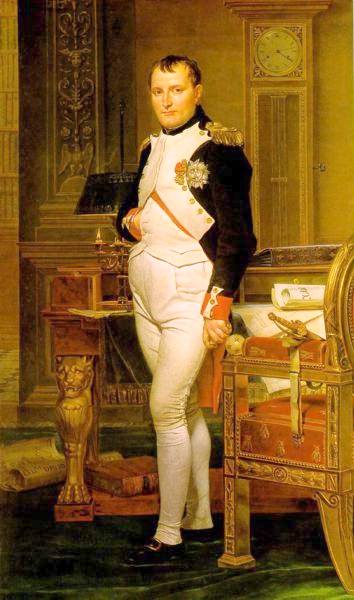
Far more accurate than a daily horoscope or other personality test, I was surprised to see what my results revealed about me. In class, Swan’s activity asked us to draw what we wanted to be when we were younger. I drew me as the president. Interestingly enough, people who share my Keirsey results are Thomas Jefferson and Napoleon. The portrait of an ENTJ explains, “Hardly more than two percent of the total population, Fieldmarshals are bound to lead others, and from an early age they can be observed taking command of groups”. Despite such a gratifying description, they also have a “short attention span” (249). Undeniably, these qualities seem to fit my personality in a few ways.


My ENTJ Brutha

    Although some of these characteristics are spot on, there are such characteristics that may either develop later or just something I had never noticed about me. The J in “judging” says that I value a “schedule is important want syllabus that is all explained clearly, spelled out” (249). The think the most thing we can garner from these tests to distinguish our strengths and learn to conquer our weaknesses. My personality results reveal that although I may visualize my goals, I turn to Inventor or Architect for execution. Our anthology provides tips for writing that addresses the individual’s strengths. Agreeably, an extravert works best when “Taking breaks for outer stimulation” (252). Additionally, a decisive student should “narrow options to decide on a topic” when prewriting (252). I think these unique techniques allow us to target how WE learn most effectively.
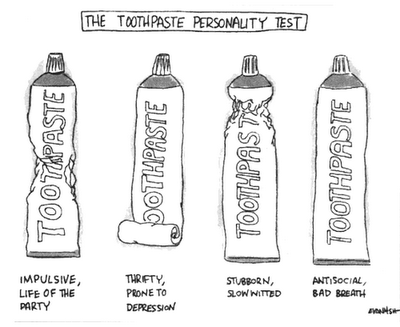
Our habits and actions may suggest much more than we think.